


A sleek appearance doesn’t determine how long a vanity will last. A modern bathroom vanity unit can be durable when its materials and finish suit the conditions and everyday use in your bathroom. Size matters too: compact options are 325-600 mm wide, whilst standard units are 600-800 mm wide.
It’s easy to focus on colour and clean lines, but a modern bathroom vanity unit that crowds the walkway or lacks the storage you need can feel impractical every day. This guide explains what creates a modern look, what to consider when assessing durability, and how to choose a style and size that suit your space. You’ll also find practical advice on measuring, comparing wall-hung and floor-standing designs, and balancing appearance with useful storage.
Key Takeaways
- Choose between wall-hung, freestanding, fitted and countertop designs by considering the look you want, available storage and how the unit will work in your bathroom.
- Assess durability through the materials and finish, and consider how daily use and bathroom conditions may affect their upkeep.
- Look for clean lines, thoughtful details and a style that complements the rest of your bathroom, rather than relying on trend-led looks alone.
- Measure the available floor space and clearance around doors and drawers before settling on a size, then explore coordinated bathroom furniture, basins and LED mirrors.
Should I choose a wall-hung or floor-standing unit?
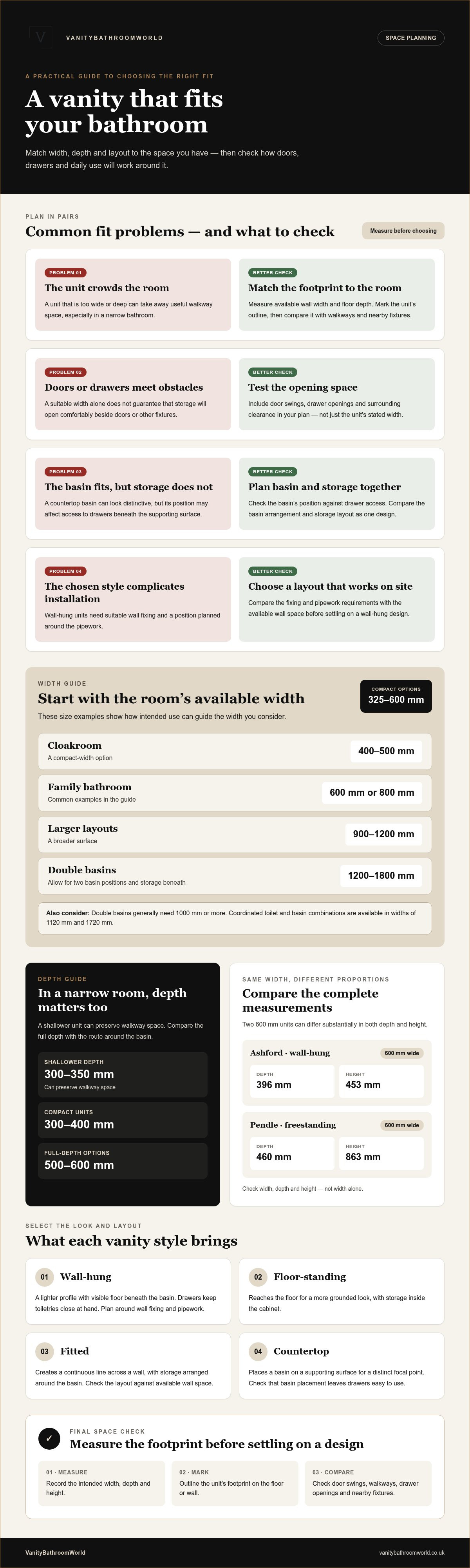
Choose a wall-hung unit for a lighter profile and visible floor beneath the basin. It can make a compact bathroom feel more open, while drawers keep toiletries close at hand. Plan its position around the wall fixing and pipework. A floor-standing unit reaches the floor, creating a more grounded look and providing storage inside its cabinet. Compare both options with your available space, preferred style and storage needs.
Dimensions show how much designs can vary. A 600 mm wall-hung Ashford unit measures 396 mm deep and 453 mm high. A 600 mm freestanding Pendle unit measures 460 mm deep and 863 mm high. These examples have different depths and heights, so check the full measurements rather than choosing by width alone. Also consider whether doors or drawers can open without meeting nearby fixtures.
Fitted vanity units create a continuous line across a wall, with storage arranged around the basin. They suit bathrooms where you want the furniture to feel visually connected, but the layout must work with the available wall space. Countertop units place a basin on a supporting surface to create a distinct focal point. Check the basin’s position against drawer access so the storage remains easy to use.
Coordinated toilet and basin combinations can bring several fixtures into one coherent arrangement. Available widths include 1120 mm and 1720 mm, so measure the wall and surrounding clearance before choosing a configuration. For a double washbasin, modern double-sink vanity units are 1200 mm to 1800 mm wide. They provide two basin positions, but need sufficient width for comfortable use and storage beneath.
Measure the intended width, depth and height, then mark the unit’s footprint on the floor or wall. Compare the outline with door swings, walkways and drawer openings. Choose wall-hung for an open visual effect, floor-standing for a grounded cabinet, or fitted and countertop designs for a more integrated or sculptural finish.
Are modern vanity units durable?
Durability depends on construction, finish and care, not colour alone. Bathroom furniture faces splashes, frequent handling and regular cleaning, so inspect the surface and edges closely. White gloss gives a crisp look, while black or oak wood-effect finishes create a warmer or more graphic feel. Choose a surface that suits your routine, and wipe up water instead of letting it sit around joints or edges.
Wood-effect finishes resemble timber but are not the same as solid wood. Walnut and oak wood-effect options, for example, offer different tones, from deeper and richer to lighter and more natural. Fluted fronts add texture, while curved detailing softens the unit’s outline. These features shape the appearance but do not indicate how the furniture is made. Assess the finish, exposed edges and drawer movement separately.
Handles affect everyday use, too. A black handle contrasts with a white front, while chrome adds a bright, reflective accent. Brushed gold brings warmth to darker finishes. Consider how often you’ll touch the handle and whether its shape feels comfortable to grip. Minimal-looking fronts reduce visual interruption, while a defined handle can make drawers easier to open without pressing directly on the finish.
Before choosing, compare samples or product images in the bathroom’s lighting, then consider cleaning and wear. White gloss can show marks differently from a textured wood-effect surface; neither appearance alone proves greater durability. Look for clear care guidance and inspect how the basin meets the top, since this area receives regular splashes. For a coordinated look, browse bathroom furniture finishes alongside your chosen basin, then select a design whose upkeep suits your household.
What defines a modern vanity unit?
Clean and maintain a modern bathroom vanity unit with a soft cloth and suitable non-abrasive cleaner. Wipe splashes from the basin and cabinet promptly, then dry exposed edges. Follow the care guidance for the specific finish, as gloss, wood-effect and textured surfaces may need different attention. Clear drawer contents regularly and wipe inside to prevent dust and spills building up around toiletries.
Modern bathroom furniture often combines uncluttered forms, practical storage and deliberate detailing. White gloss creates a crisp, reflective surface; black makes a stronger visual statement. Oak or walnut wood-effect fronts introduce warmth, while fluted panels add texture to a simple silhouette. Curved edges soften geometric shapes, and slim handles or handle-free fronts keep the overall look restrained.
When comparing bathroom furniture, look beyond overall style. Review the dimensions, basin arrangement, storage layout and finish descriptions together. A countertop basin paired with a clean-lined cabinet, for example, looks different from an integrated basin with smooth-front drawers. Check that details such as handle colour and panel texture work with the taps, mirror and other visible fittings.
Modern and traditional styles can use similar materials, but their details create different moods. Modern designs tend towards straight lines, simplified fronts and controlled contrast, such as white paired with black. Traditional furniture may have decorative profiles, raised-panel doors or ornate handles. To blend the styles, pair a contemporary detail, such as a fluted front, with a familiar wood-effect finish. This can make the room feel current while retaining warmth.
Unit sizes and bathroom space planning
Start with the available wall width, then match the unit to the room’s daily use. A cloakroom commonly suits a 400-500 mm vanity, while family bathrooms often use 600 mm or 800 mm widths. For larger layouts, units from 900 mm to 1200 mm offer a broader surface. Double basins generally need 1000 mm or more, with modern double-sink units extending from 1200 mm to 1800 mm.
Depth can matter as much as width, especially in a narrow bathroom. Compact units range from 300 mm to 400 mm deep, while full-depth options measure 500 mm to 600 mm. A shallower depth of 300-350 mm can preserve walkway space; around 450 mm can allow more drawer storage. Measure from the wall to the nearest obstruction, including the path beside the basin.
Check height alongside width and depth. Modern vanity units typically stand 800 mm to 900 mm high, but the basin and worktop affect the finished level. Compare the product’s full dimensions with existing plumbing positions and the height that feels comfortable for household members. A wall plan or cardboard outline helps reveal whether the unit will crowd the room before you commit.
Finally, map the moving parts. Mark where doors and drawers open, then account for nearby toilets, showers and towel rails. Leave enough clearance for drawers to extend without striking another fixture, and consider the route into the bathroom for bringing the furniture inside. Recheck your measurements at floor level and at the wall, since skirting or pipework can change the usable space. For a practical next step, compare bathroom furniture dimensions against your measurements before choosing.
VanityBathroomWorld: Vanity Units
VanityBathroomWorld offers vanity units and bathroom furniture to help you match your chosen style with your storage needs. Once you’ve measured your space and chosen between wall-hung and floor-standing designs, explore options that suit your bathroom’s layout and finish. Pair a vanity with a basin for a coordinated focal point, or add an LED mirror to complete the room’s lighting and visual balance.
Whether you’re refreshing a compact cloakroom or updating a family bathroom, compare proportions and finishes that suit your space. A considered combination of furniture, basin and mirror can create a cohesive look while meeting everyday needs. Explore the bathroom furniture, vanity units, basins and LED mirrors at VanityBathroomWorld.
Shape a bathroom that feels like yours
Before settling on a modern bathroom vanity unit, consider how you want the room to feel at the start and end of each day. A calm, pared-back scheme may call for quiet finishes and clean lines; a more expressive space can balance texture with a distinctive focal point. Keep your preferences in mind as you make the final choice, so the room feels coherent rather than assembled from separate purchases. Your bathroom should support your routines while reflecting your taste.
It can help to save a few images, note the details you keep returning to, and compare them with your bathroom’s existing palette. That simple edit makes it easier to choose furnishings that feel personal and remain pleasing beyond a passing trend. When you’re ready to explore the next step, contact VanityBathroomWorld and continue shaping a bathroom that reflects your way of living.
Frequently Asked Questions
How do I choose the right width and depth for a vanity unit in my bathroom?
Measure the usable wall space, then map the unit’s footprint before deciding. Include the basin’s projection, pipework and any skirting that could affect the fit. Open nearby doors and drawers fully to check whether they obstruct the walkway or another fixture. A paper or cardboard template helps you picture the chosen dimensions in the room before purchase.
What's the difference between countertop basins, integrated basins and cloakroom units?
A countertop basin sits above a supporting surface, while an integrated basin forms part of the unit’s top. A cloakroom unit is a compact furniture format for smaller rooms. Consider how each arrangement affects access to the tap and the space around the bowl. For a countertop design, account for the basin’s height above the surface when assessing the finished setup.
Which finishes work best in a bathroom with moisture and frequent use?
Choose a finish that suits the bathroom’s use and the level of upkeep you prefer. In a busy family bathroom, consider how clearly fingerprints, water marks and everyday splashes will show. Compare the care guidance for each option, and select a finish that will still appeal within the cleaning routine you can maintain.
What styles and features define a modern bathroom vanity unit?
Treat modern style as a coordinated choice, not a single feature. Decide whether the vanity should blend into the room or become its focal point, then consider its visual weight alongside nearby fittings. To refine the scheme, repeat one detail, such as a handle finish, elsewhere in the bathroom without matching every surface.
What vanity unit sizes are available, and how do I choose the right size?
Choose a size that balances the room’s proportions with your storage needs. Before selecting a unit, gather the toiletries and cleaning items you plan to store, then consider whether the drawer layout can accommodate them. This helps you decide whether a compact unit suits occasional use or a broader option better supports shared routines.
What materials and finishes are best for a bathroom vanity unit?
The right choice depends on construction as well as appearance. Compare how the cabinet is assembled, how its edges are finished and whether the material suits the look you want over time. Product descriptions and care guidance can help you make an informed comparison. Prioritise a well-finished unit that meets your bathroom’s everyday needs.