


A small bathroom can gain useful storage without feeling crowded, but the right solution depends on where space is available. The most effective bathroom vanity storage ideas make the basin area work harder, pairing a practical surface with concealed storage.
It’s easy to assume that more storage means a larger cabinet, yet a slim drawer or a well-planned cupboard can keep everyday essentials close without overwhelming a compact room. This guide explains what different small-bathroom storage options may cost and how to weigh the space they use against the storage they provide.
Explore slim drawers for smaller products, compare cupboards with drawers, and see how a basin vanity can conceal toiletries and household essentials. You’ll also find ways to plan storage around the room’s proportions, so the finished space feels calm, considered and easy to use.
Key Takeaways
- Compare storage options by their fitted cost and the space they occupy, from tall units to simple door-back hooks.
- Choose shallow, organised drawers to keep small toiletries easy to see and reach.
- Balance drawers and cupboards with your habits, and consider mirror cabinets or recessed niches when floor space is limited.
- Plan a basin vanity around concealed storage and the room needed for the basin, doors and drawers to work comfortably.
1. Cost to add storage to a small UK bathroom
The cost of a bathroom vanity unit in the UK depends on its dimensions, basin and storage layout. Fitting and changes to the room can also affect the overall budget. To compare options, separate the cost of the unit from any plumbing or installation work.
The best bathroom vanity storage ideas for small rooms use overlooked spaces: consider a tall storage tower, open shelves or door-back hooks. A tower can hold towels and toiletries, while shelves can keep attractive pieces visible and frequently used items within reach. Open shelving around sink plumbing can use space that a cupboard might leave awkward. Baskets group smaller products, such as shampoo, without turning shelves into a jumble. Keep the bottom shelf clear enough for cleaning and daily access.
Open shelving can frame a countertop basin, creating a useful ledge for toiletries and a considered display. Choose a shelf depth that leaves the basin and tap comfortable to use, and keep the surface to a few practical items. Suction-cup hooks, shelves and containers can make use of smooth surfaces without taking up floor space. Position them where splashes are manageable, and use each container for one category, such as shampoo or hand-care items.
To add vanity storage without visual clutter, combine concealed storage with a small, orderly display. A swivel shelf in an open bathroom frame can bring stored items forward, while a door-back rail keeps towels or accessories off the counter. Measure the available wall and floor space before choosing a tall unit, and check how its doors and drawers will open. This keeps useful items close at hand without letting loose products compete for attention.
2. Slim drawers for small bathroom products
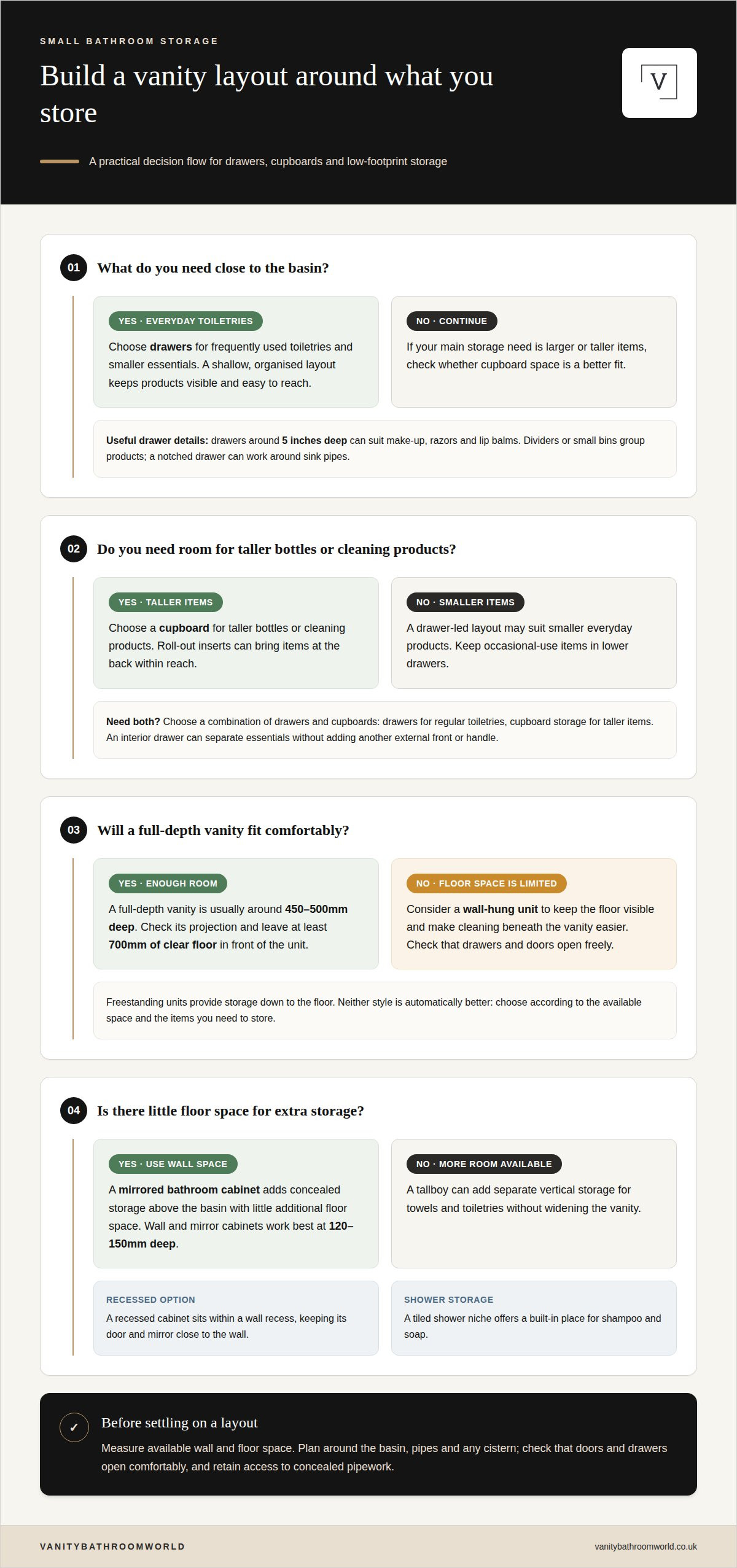
Drawers around 5 inches deep can keep makeup, razors and lip balms visible instead of buried beneath larger items. Use transparent boxes or plastic mini-bins to group products, making each category easy to find and return. A clever layout gives small toiletries a proper place, while open shelves can display a few stylish pieces rather than hold every daily essential.
For moisture resistance, choose vanity materials and finishes intended for bathroom use, with sealed surfaces that are simple to wipe dry. Keep splashes from lingering on the drawer fronts or interior, and avoid storing damp towels beside personal care products. These practical choices help maintain a clean finish without relying on a particular colour or style.
Sink pipework doesn’t have to make every drawer unusable. A notched drawer can fit around pipes and use the space beside them; vertical compartments can hold small items upright. A fitted slot can keep a frequently used hairdryer within reach. Before choosing a layout, measure the drawer when open and closed to check that it clears nearby doors and leaves enough room to move.
In a shared vanity, assign each person a section of the drawers, then use dividers or bins to keep daily items in place. Store cleaning products upright in a separate container under the sink, away from toiletries, and keep concealed pipework accessible. This gives each item a place without turning the drawer into a jumble.
Choose drawer positions around your routine: keep everyday skincare near the top, with occasional-use items lower down. If you’re comparing bathroom vanity units, look at how the drawer arrangement suits your products and basin plumbing. A considered interior can make even a compact vanity feel orderly, with smaller essentials easy to reach and larger items kept neatly apart.
3. Should I choose drawers or cupboards in a bathroom vanity?
UK bathroom vanity units include wall-hung and freestanding designs, with drawers, cupboards or a combination. Choose drawers for toiletries you use often; a cupboard suits taller bottles or cleaning products. A full-depth vanity is usually around 450mm to 500mm deep, so consider its projection before selecting a layout.
Inside a cupboard, roll-out inserts bring items at the back within reach. A narrow vertical pullout can use space beside a basin for smaller products, while an interior drawer separates everyday essentials without adding another front or handle. Plan around pipes and retain access to concealed pipework or cisterns. These details help make use of the cabinet interior instead of losing space behind plumbing.
Wall-hung units keep the floor visible and can make cleaning beneath the vanity easier; freestanding units provide storage down to the floor. Neither is automatically better: choose by the space available and the items you need to store. Leave at least 700mm of clear floor in front of a storage unit for comfortable use. A tallboy can add separate vertical storage for towels and toiletries without widening the vanity.
A mirrored bathroom cabinet combines a mirror with concealed storage above the basin, using little additional floor space. Wall cabinets and mirror cabinets work best at 120mm to 150mm deep. A recessed cabinet sits within a wall recess, keeping its door and mirror close to the wall; a tiled shower niche offers another built-in place for shampoo and soap. Antique freestanding cabinets can hold towels and add a decorative focal point, but suit rooms with space for their footprint.
To make the most of vanity storage, group products by use, add roll-out inserts to deep cupboards, and choose drawer and door positions that open freely. The right balance keeps a vanity practical without crowding the room.
4. Vanity units combining a basin with concealed storage
A vanity unit brings the basin and everyday storage together. A cupboard beneath the bowl can conceal cleaning supplies or spare toilet rolls, while drawers keep hand towels and toiletries close. Plan the interior around the basin and pipework, rather than treating the cabinet as uninterrupted storage. Preserve access to concealed pipes, and use the remaining space for items that belong near the sink.
Start by noting the position of the basin, tap and plumbing, then consider how the doors or drawers will open. This matters especially with two sinks, which can take up much of the unit’s top. With less worktop available, the storage below becomes more valuable. Decide which products need quick access and which can sit behind a door.
Keep hand towels and daily toiletries in the most accessible section, and place cleaning products or spare toilet rolls in a separate cupboard area. Grouping bottles by purpose helps prevent clutter, while a small basket can gather loose items without mixing them with cleaning supplies. Leave room around pipework, and don’t pack the interior so tightly that items at the back are hard to reach.
Before choosing a unit, check the whole arrangement: basin position, plumbing, interior storage and the movement of every door or drawer. A central basin may divide the available storage differently from one positioned to the side. Consider practical additions only where they suit your routine, such as an internal drawer for smaller items or a shelf for taller bottles.
The takeaway is simple: choose concealed storage around the basin’s real footprint, not just the cabinet’s outer shape. This balances a clear surface with purposeful storage below. Explore basin vanity units to find a design that brings these two functions together.
VanityBathroomWorld: Vanity Units
VanityBathroomWorld offers vanity units that pair a basin with concealed storage, alongside bathroom furniture, basins and LED mirrors. Explore the range to find pieces that bring practical essentials and a considered look together.
Use these storage principles to narrow your choice: decide what needs to sit close to the basin, how much room doors or drawers need, and which items you’d rather keep out of sight. Then explore vanity units with those everyday needs in mind, alongside complementary bathroom furniture and mirrors.
For a small bathroom, focus on the fit between the basin, available floor space and the storage you’ll actually use. A well-chosen combination can make the room feel more composed without adding unnecessary pieces. Explore VanityBathroomWorld’s vanity units, bathroom furniture and mirrors to find pieces for your space.
Make your next choice with confidence
Before settling on a design, picture how you want the room to feel at the start and end of each day. A clear counter, a place for everyday essentials and a consistent finish can make storage feel intentional rather than added on. Use these bathroom vanity storage ideas as a starting point, then shape your choice around your routine and the character of your home.
Look beyond capacity: the proportions, basin position and visual weight of furniture all influence the room’s atmosphere. Consider how the pieces will sit together and whether their lines complement the existing finishes. A thoughtful combination can make a compact space feel more composed without asking it to do more than it can.
When you’re ready to explore your options, contact VanityBathroomWorld today. Take the next step towards a bathroom that feels beautifully ordered and distinctly yours.
Frequently Asked Questions
How much does it cost to add storage to a small UK bathroom?
The final scope depends on how much joinery is required and the shape of the space. A small addition and a made-to-measure storage run involve different budget decisions, so compare what each option includes before choosing.
Should I choose drawers or cupboards in a bathroom vanity?
Choose drawers for small items you want to see at a glance, and cupboards for products that need upright clearance. A combination can suit a mixed routine. Before deciding, gather your tallest bottle, a hair tool and daily toiletries, then compare them with the usable interior. This quick inventory can reveal whether a shallow drawer or open cupboard space better suits your belongings.
What organisers and drawer inserts fit bathroom vanity units?
Choose organisers to fit the drawer’s usable base, not its external dimensions. Measure the clear width and depth, allowing for the drawer sides and any shaped section around plumbing. Removable trays can group small items, while a taller compartment may suit products stored upright. Leave enough clearance for the drawer to close smoothly, and avoid overfilling inserts so items remain easy to lift out.